explorer
What does CueCrux search?
Your own store, retrieved under hard token budgets
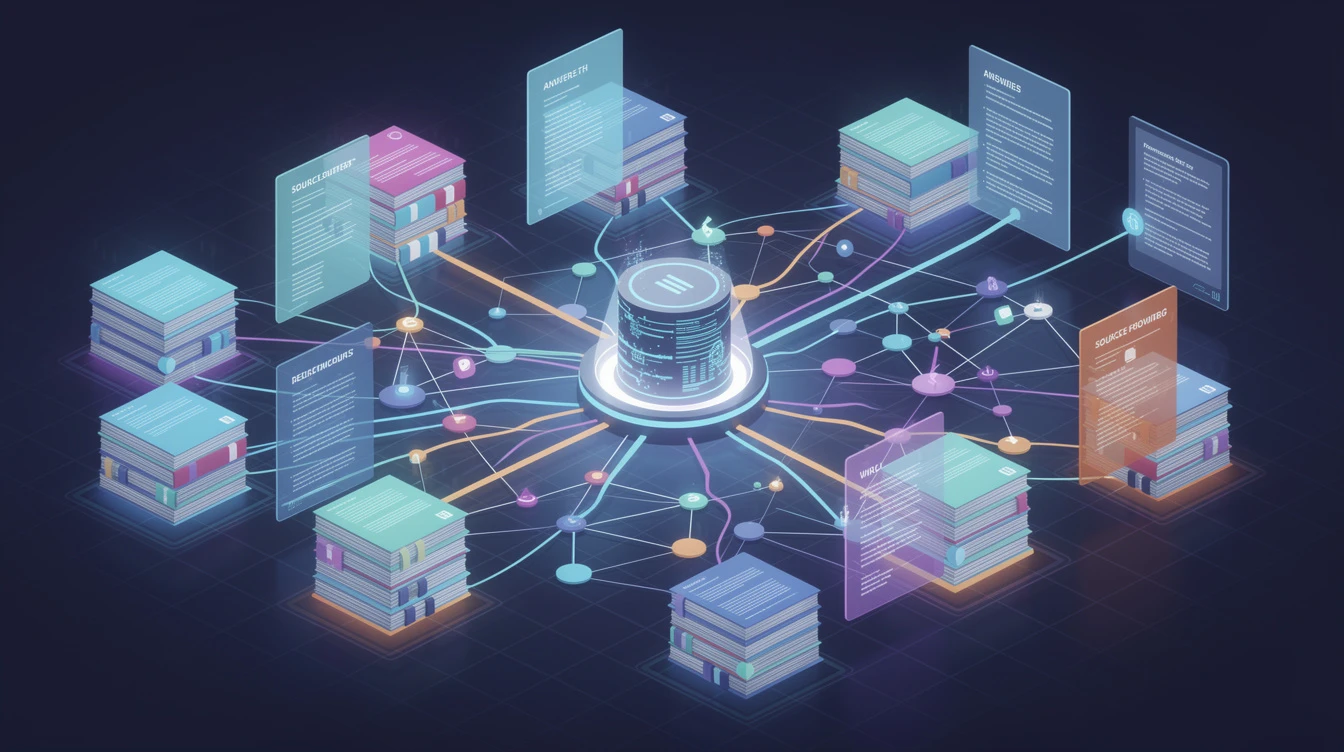
CueCrux is not a web search engine. Retrieval runs over the store your agents build: facts, sessions, decision records, work items, checkpoints and engrams, all of it written through receipted, passport-bound tool calls.
The local lanes run on CPU with no external dependency. Lexical retrieval is BM25-class, fused with graph signals from the relations in your store. Dense retrieval is bring-your-own embedder: point the daemon at Ollama, vLLM, TEI, llama.cpp or LiteLLM and the dense lane runs locally, and is never metered. Richer lanes (entity, event and navigational retrieval) are hosted on CoreCrux and come with the paid tiers.
Every retrieval call takes a hard token_budget. This is not advisory; the daemon trims results to fit. The point is economic as much as technical: agents that retrieve without budgets flood their own context windows and your bill. On the ScoreCrux benchmark, budgeted retrieval returns far fewer tokens than naive top-K while holding recall.
Because retrieval is over your own store, the trust questions change shape. There is no ranking algorithm to second-guess and no third-party corpus to vet. What comes back is what your fleet put in, and every item in the store traces to the receipt that wrote it.