explorer
How does CueCrux plug into my agents and tools?
MCP-native: 100+ tools any compliant agent can call
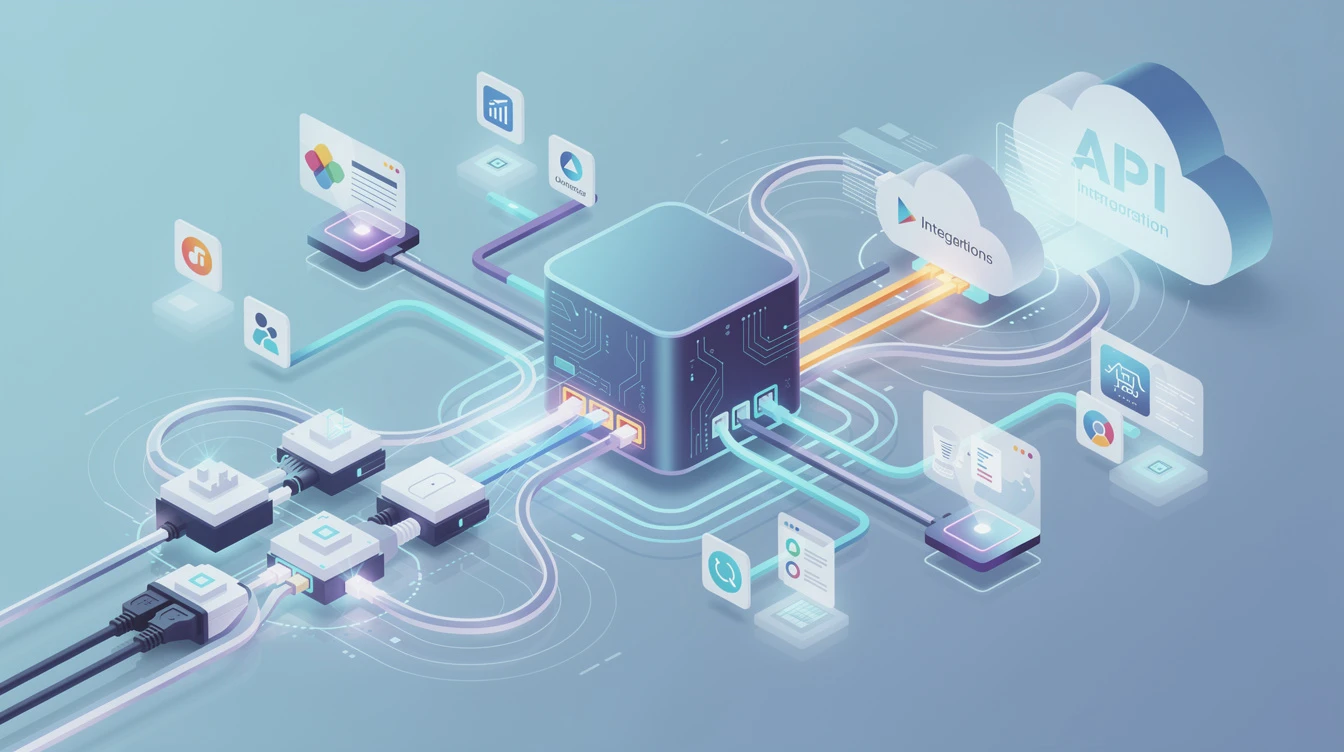
CueCrux integrates the way agents already work. The Crux Daemon is an MCP server exposing over 100 tools covering memory (facts, sessions, checkpoints, handoffs), retrieval, the ExecPlans work board, decision records, and governance operations such as receipt verification. Any MCP-capable agent, whether a coding assistant, a custom harness or an orchestration framework, connects and starts calling tools; there is no proprietary SDK to adopt.
Retrieval calls come with a discipline that matters at integration time: every one takes a hard token_budget, and the daemon trims results to fit. Context cost becomes a parameter you set rather than a surprise you discover, and in ScoreCrux measurements, budgeted retrieval returns far fewer tokens than naive top-K for the same tasks. If you are wiring CueCrux into a pipeline where tokens are money, that is the difference between a predictable line item and a leak.
Dense retrieval integrates with the embedding stack you already run. The daemon talks to Ollama, vLLM, TEI, llama.cpp and LiteLLM endpoints, and that local lane is never metered.
Every integration inherits the governance layer automatically. Connections bind to passports, tool calls carry them, and state mutations are receipted, so a third-party agent wired in this afternoon is as attributable as one you built yourself. There is no unaudited side door.
For humans, the local operator console at localhost:14800 provides the canvas board, relation graph, ExecPlans kanban and session views over the same store. And for moving context in and out, .cruxpack export and import gives you a portable, verifiable interchange format rather than a scrape of the database.