explorer
How does CueCrux handle my private data?
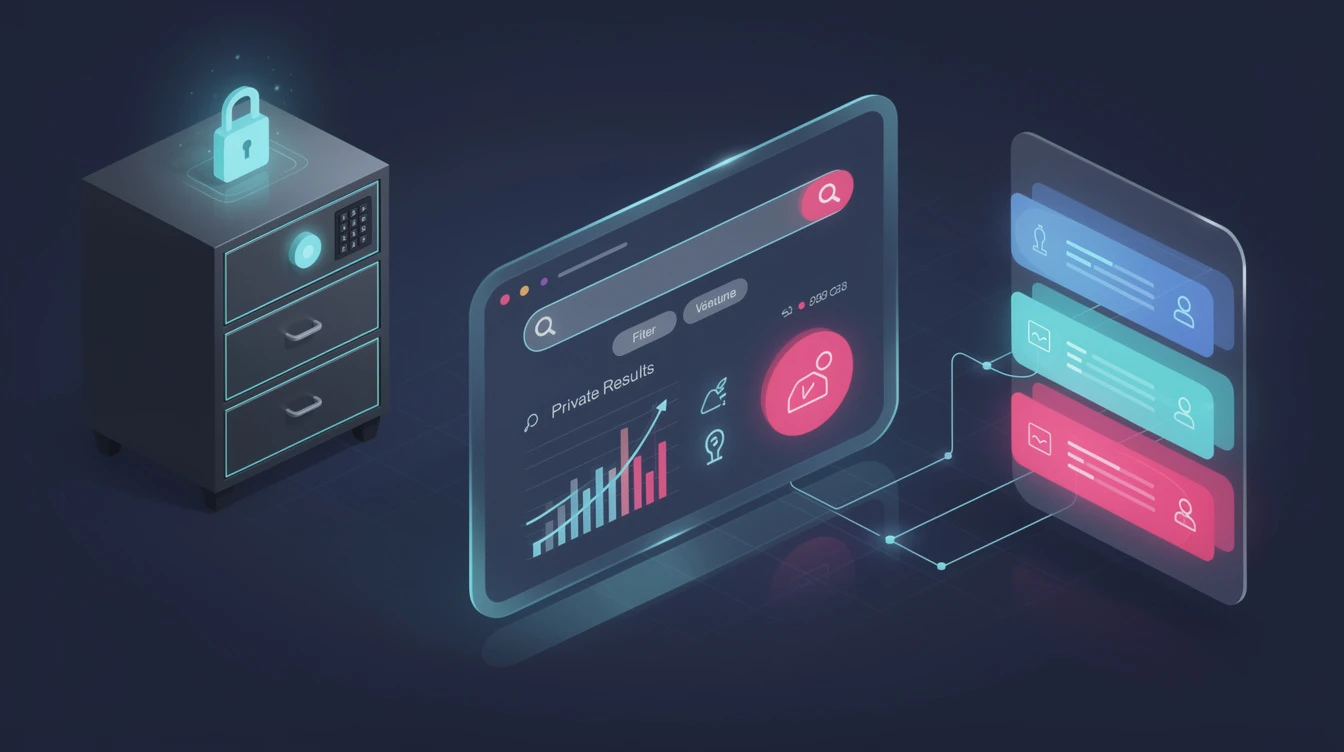
Local-first by design: memory and retrieval run on your machine
The default CueCrux deployment is one free binary running on your own hardware. It is CPU-only, requires no account, and has no cloud dependency. Agent memory, which includes facts, sessions, decision records and work items, lives on an append-only spine on disk you control. There is no upload step and no hosted copy unless you create one deliberately.
Retrieval is local too. The daemon fuses BM25-class lexical search with a relation graph, entirely on your machine. If you want dense semantic retrieval, you bring your own embedder: the daemon speaks to Ollama, vLLM, TEI, llama.cpp and LiteLLM endpoints that you configure. The local dense lane is never metered. Richer retrieval lanes (entity, event and navigational) run on hosted CoreCrux, and using them is an explicit opt-in, not a default.
Access is never anonymous. Every connection to the daemon binds to a passport, and every tool call carries it. Any read or write in your store resolves back to who acted, at what trust tier, under which grants. That holds for your own agents and for anything else you connect.
Every state mutation is signed with a CROWN receipt (Ed25519) and hash-chained on a BLAKE3 append-only spine, so you can prove after the fact what changed and what did not. Verification works offline with corecruxctl verify-store: you do not need our servers, or our word, to check your own data.
The privacy position is structural rather than contractual. A policy document can promise not to look at your data; a binary on your own machine, holding data that never leaves, does not need to promise.