usecase
Claim Verification
Check assertions against sources, then check the checker
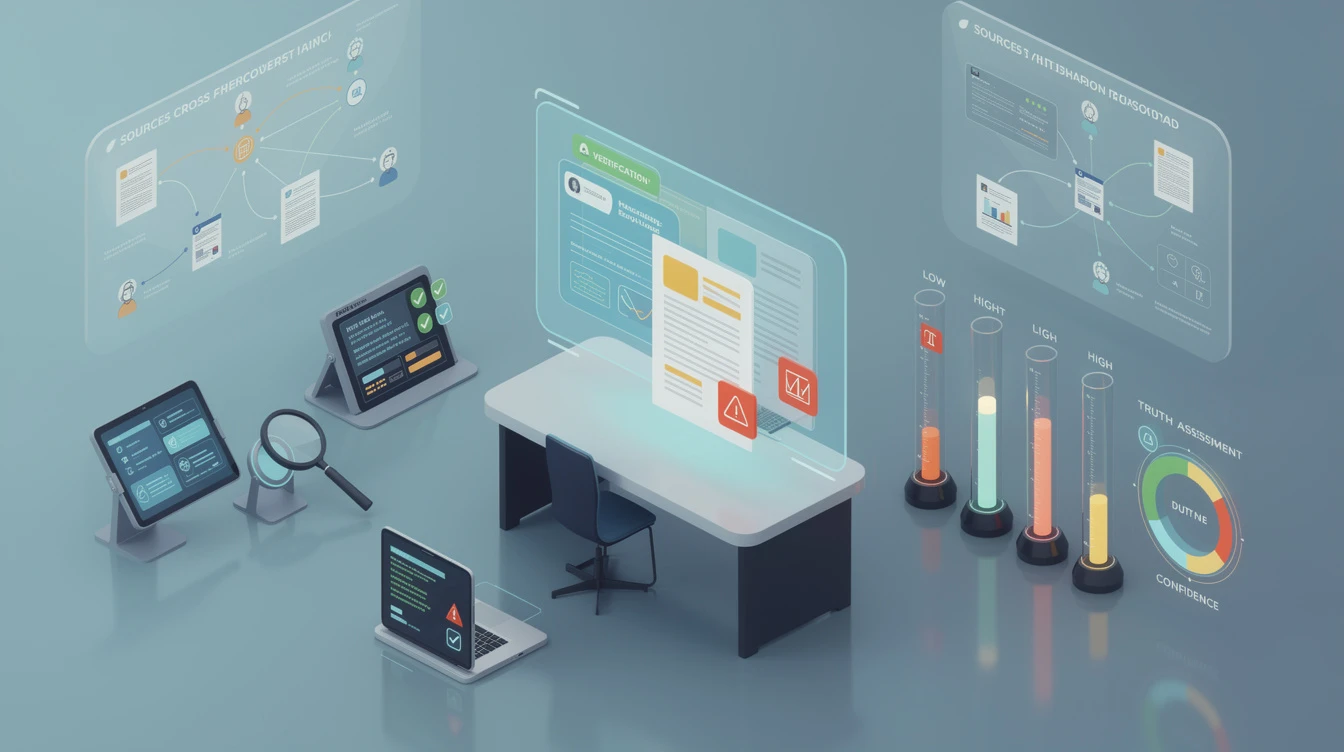
Vendor decks, counterparty representations, and public statements all make claims that someone eventually has to check. CueCrux structures that check: agents search for evidence bearing on the claim, and the result is presented as an evidence balance with provenance on both sides. Supporting and contradicting material each carry receipts to their sources; the platform does not declare true or false, it shows the reader what the evidence will bear.
The distinctive part is that the verification itself is verifiable. The whole checking process ran on the receipt spine, so the report of "what we checked and what we found" replays. If a claim assessment is later challenged, the response is not "we were careful", it is a signed trail.
This cuts both ways, deliberately. Any receipt CueCrux produces can be verified offline against its Ed25519 signature and the BLAKE3 hash chain, without an account and without network access. An organisation receiving a CueCrux-backed claim from someone else can check it independently, which is what receipts over vibes means in practice.
Procurement, diligence, and research teams use this to stop unverified assertions at the door, with a record of having done so.